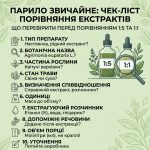


Agrimony tincture 1:5 vs 1:1 extract is not a comparison of two simple scores. Each ratio describes a relationship between herbal starting material and either extraction solvent or finished preparation. Before comparing two bottles, you must identify what both numbers represent, which units apply, and whether the product is a tincture or liquid extract.
HerbEra treats ratio reading as an accounting problem: define both sides before drawing any conclusion. A ratio without its convention, solvent, plant part, and raw-material state can easily be misread.
What is the short answer?

A 1:5 ratio commonly means one part of herbal material was used with five parts of solvent or to make five parts of preparation. A 1:1 ratio commonly means one part of herbal material corresponds to one part of preparation.
The larger second number does not indicate a more concentrated product. Under the same starting-material-to-finished-product convention, 1:1 represents more starting herb per unit of liquid than 1:5. However, you cannot apply that conclusion to every pair of labels because the ratios may use different definitions.
The official European agrimony assessment illustrates this problem. It lists a tincture as a 1:5 ratio of herbal substance to extraction solvent using 45 percent ethanol. It lists a separate liquid extract as DER 1:1 using 25 percent ethanol. The format, denominator, and solvent concentration are not the same.
| Label feature | Agrimony tincture 1:5 | Agrimony liquid extract 1:1 |
|---|---|---|
| Preparation type | Tincture | Liquid extract |
| Typical ratio reading | One part herb to five parts solvent or preparation | One part herb to one part liquid preparation |
| EMA agrimony wording | Herbal substance to extraction solvent ratio | Drug-extract ratio |
| EMA extraction solvent | Ethanol 45 percent by volume | Ethanol 25 percent by volume |
| Ratio denominator | Extraction solvent in the EMA description | Liquid herbal preparation obtained under the DER definition |
| Direct five-fold comparison | Not justified unless the labels use the same ratio convention, units, starting material, plant part, and final-product basis | |
What does the first number in an extract ratio mean?
The first number normally represents the relative amount of herbal starting material. For a 1:5 ratio, the first number is one part of herb. For a 1:1 ratio, it is also one part of herb.
The label should state whether that herb was fresh or dried. One kilogram of fresh material and one kilogram of dry material do not represent the same material basis because fresh plants contain water.
The botanical identity also matters. A clear agrimony label should name Agrimonia eupatoria L. and identify the plant part, such as flowering tops or aerial parts. A ratio cannot correct a mismatch in species or plant part.

What does the second number mean?
The second number may represent extraction solvent, finished preparation, or extract obtained. You must find the applicable definition before calculating anything.
Extraction solvent basis
A ratio of herbal substance to extraction solvent describes how much solvent entered the extraction process. A 1:5 statement may mean that one gram of dry herb was combined with five milliliters of extraction solvent.
This does not always establish the exact final bottle volume. Processing, filtration, retained liquid, adjustment, and manufacturing convention can affect the relationship between solvent input and finished liquid.
Finished-preparation basis
Some systems express the ratio as the weight of herbal material used relative to the quantity of final preparation. The National Institutes of Health describes botanical-to-extract ratios for tinctures as the weight of dried botanical relative to the volume or weight of the finished product.
Under this convention, 1:5 by weight to volume can mean one gram of dry herb used to make five milliliters of finished preparation.
Drug-extract ratio
The European Medicines Agency defines a drug-extract ratio as the quantity of herbal substance used in manufacturing relative to the quantity of herbal preparation obtained. The term “drug” in DER refers to the herbal substance, not to a finished pharmaceutical product.
A genuine or native DER relates the herbal substance to the genuine extract before excipients are added. A total DER may relate the herbal substance to the complete extract after included formulation components are considered.
How does the ratio math work?
The basic formula is simple only when the label clearly defines the units and denominator.
Starting herb per unit of finished liquid = first ratio number divided by second ratio number.
For a weight-to-volume ratio, the result can be expressed as grams of starting herb per milliliter of finished liquid. This calculation describes input equivalence. It does not establish identical chemical composition across different solvents or processes.
| Conditional example | Calculation | Starting-material relationship | Important limitation |
|---|---|---|---|
| 1:5, explicitly defined as dry herb to finished liquid | 1 divided by 5 | 0.2 g dry herb per 1 mL finished liquid | Valid only if the label uses this exact convention |
| 50 mL bottle at 1:5 on the same basis | 50 divided by 5 | 10 g dry herb used for 50 mL finished liquid | Does not describe extraction yield or constituent profile |
| 1:1, explicitly defined as dry herb to finished liquid | 1 divided by 1 | 1 g dry herb per 1 mL finished liquid | Valid only if weight-to-volume units are confirmed |
| 50 mL bottle at 1:1 on the same basis | 50 divided by 1 | 50 g dry herb used for 50 mL finished liquid | Cannot be applied to a label using a different DER definition |
These examples show the arithmetic, not a universal conversion for retail products. Do not use them when a label leaves the denominator undefined.
Why is the EMA agrimony example not a simple five-fold comparison?
The EMA documentation describes two separately defined preparations:
- A tincture with a 1:5 ratio of herbal substance to extraction solvent, using ethanol 45 percent by volume.
- A liquid extract with DER 1:1, using ethanol 25 percent by volume.
The 1:5 statement identifies the relationship to extraction solvent. The 1:1 DER identifies a relationship between herbal substance and liquid extract. Treating the second numbers as if they shared an identical denominator skips a required definition.
The solvent systems also differ. Ethanol concentration can influence which botanical constituents enter the liquid and their relative proportions. Ratio arithmetic alone does not describe the finished composition.
HerbEra’s editorial benchmark is that a ratio without units, solvent, and preparation type is incomplete for comparison. A buyer should not have to infer these fields from the front of the bottle.
What information is required for a valid comparison?
You need more than two ratios. A useful comparison requires matching definitions across both products.
Botanical species
Both labels should identify Agrimonia eupatoria L. The common name “agrimony” can be confused with unrelated plants that share part of the name.
Plant part
Confirm whether the preparation uses flowering tops, aerial parts, or another plant part. Ratios based on different source materials are not clean comparisons.
Fresh or dry starting material
Check whether the first ratio number represents fresh or dried agrimony. Water naturally present in fresh material changes the basis.
Ratio convention
Determine whether the second number means extraction solvent, genuine extract, total extract, or final preparation. Look for weight-to-weight or weight-to-volume units.
Extraction solvent
Identify ethanol, water, glycerol, or any combined solvent system. When ethanol is present, check its declared percentage.
Serving volume
Compare milliliters rather than assumed drop counts. Drop size varies with the dropper, viscosity, angle, and handling.
Excipients and diluents
Check whether glycerin, water, carriers, or other formulation ingredients were added after extraction. These can affect the final volume and the meaning of an extract ratio.
Standardization statement
A standardized marker is a separate label field. It does not change the mathematical definition of 1:5 or 1:1, and the ratio alone does not prove standardization.
Does 1:1 always mean a concentrated extract?
No. A 1:1 ratio means equal relative parts under the stated convention. Whether the preparation is described as concentrated depends on how the ratio is defined and how it compares with the starting material and manufacturing standard.
In the TGA naming framework, 1:1 can mean one part of dry herb used to make one part of preparation. Ratios such as 3:1 describe multiple parts of dry herb used to make one part of a concentrated preparation. Ratios such as 1:5 describe a more dilute starting-material relationship under that same framework.
This terminology still does not rank finished products by botanical composition. Extraction yield and solvent selectivity remain separate issues.
Can bottle size or serving directions clarify the ratio?
Bottle size tells you the total amount of liquid sold. It does not define the extract ratio. Two 30 mL bottles can use different amounts of starting herb and different solvents.
Serving directions also do not explain how the product was manufactured. They may help calculate how many servings a bottle contains, but they should not be used to reconstruct a missing ratio definition.
A full dropper is not a standardized unit across brands. Use the milliliter marking or another calibrated device specified by the product.
Agrimony Extract Ratio Checklist
Use this checklist before comparing a 1:5 tincture with a 1:1 liquid extract. It identifies the missing details that commonly make ratio comparisons unreliable.
Confirm the preparation type
Determine whether each bottle contains a tincture, liquid extract, glycerite, or another preparation.
Read the botanical name
Look for Agrimonia eupatoria L. on both labels.
Match the plant part
Check whether both products use flowering tops, aerial parts, or the same defined source material.
Identify fresh or dry herb
Confirm the moisture basis represented by the first ratio number.
Define both sides of the ratio
Find out whether the second number refers to solvent, genuine extract, total extract, or finished liquid.
Check the units
Look for weight-to-volume or weight-to-weight notation.
Compare the solvents
Record the solvent names and percentages instead of comparing ratio numbers alone.
Separate extract from excipients
Check whether water, glycerin, or another diluent was added after extraction.
Use milliliters
Compare declared serving volumes rather than drop counts or undefined dropperfuls.
Request clarification
Ask the manufacturer when the label does not explain the ratio convention.
FAQ
What does agrimony tincture 1:5 mean?
It commonly means one part agrimony herb to five parts extraction solvent or finished preparation. The label must define which convention applies.
What does a 1:1 agrimony extract mean?
It commonly means one part herbal material corresponds to one part extract or preparation under the stated DER system.
Does the number 5 indicate a higher concentration?
No. In a 1:5 ratio, the 5 usually represents solvent or preparation relative to one part herb.
Is a 1:1 extract automatically five times a 1:5 tincture?
No. That calculation requires identical ratio definitions, units, plant material, solvent basis, and finished-product conventions.
What solvent does the EMA agrimony 1:5 tincture use?
The documented preparation uses ethanol 45 percent by volume.
What solvent does the EMA agrimony 1:1 liquid extract use?
The documented liquid extract uses ethanol 25 percent by volume.
Does DER mean dry extract ratio?
No. DER means drug-extract ratio, where “drug” refers to the herbal substance.
Can I compare two products by drop count?
No. Drop size varies. Use the declared milliliter volume.
Does the ratio show which plant part was used?
No. The label must separately identify flowering tops, aerial parts, or another plant part.
Does an extract ratio prove standardization?
No. Standardization requires a separate declaration of the measured marker or constituent.
Glossary
Botanical-to-extract ratio
A relationship between botanical starting material and a finished extract.
Drug-extract ratio
The quantity of herbal substance used relative to the quantity of herbal preparation obtained.
DER
The standard abbreviation for drug-extract ratio.
Genuine DER
The ratio of herbal substance to genuine extract before excipients are added.
Total DER
The ratio of herbal substance to the complete extract under the applicable definition.
Extraction solvent
The liquid used to extract selected constituents from botanical material.
Tincture
A liquid herbal preparation commonly made with ethanol and water.
Liquid extract
A fluid herbal preparation defined by its extraction process, ratio, and solvent.
Weight-to-volume
A ratio comparing a mass unit of herb with a volume unit of liquid.
Dry-herb equivalent
A declared amount of dried starting herb represented by a preparation.
Conclusion
Agrimony 1:5 and 1:1 labels cannot be compared from the numbers alone. Define the preparation type, denominator, units, plant part, raw-material state, solvent, and final volume before using ratio arithmetic.
Sources Used
- Agrimony 1:5 tincture and 1:1 liquid extract definitions, Assessment Report on Agrimonia eupatoria L., Herba – ema.europa.eu/en/documents/herbal-report/final-assessment-report-agrimonia-eupatoria-l-herba-first-version_en.pdf
- Consumer definition of tinctures and botanical-to-extract ratios, Botanical Dietary Supplements Background Information – ods.od.nih.gov/factsheets/botanicalbackground-Consumer
- Drug-extract ratio, genuine DER, total DER, and genuine herbal preparation definitions, Herbal Specifications Guideline Revision 3 – ema.europa.eu/en/documents/scientific-guideline/guideline-specifications-test-procedures-and-acceptance-criteria-herbal-substances-herbal-preparations-and-herbal-medicinal-productstraditional-herbal-medicinal-products-revision-3_en.pdf
- Extraction-ratio mathematics, units, solvents, and 1:1 examples, Complete Approved Herbal Names – tga.gov.au/products/regulations-all-products/ingredients-and-scheduling-medicines-and-chemicals/ingredients-therapeutic-goods/naming-ingredients/ingredient-naming-requirements-and-categorisation/complete-approved-herbal-names
- Final extraction ratio, solvent, and equivalent-herb terminology, Plant Preparations – tga.gov.au/resources/plant-preparations
- United States labeling guidance for liquid botanical extracts and solvents, Dietary Supplement Labeling Guide Chapter IV – fda.gov/food/dietary-supplements-guidance-documents-regulatory-information/dietary-supplement-labeling-guide-chapter-iv-nutrition-labeling